
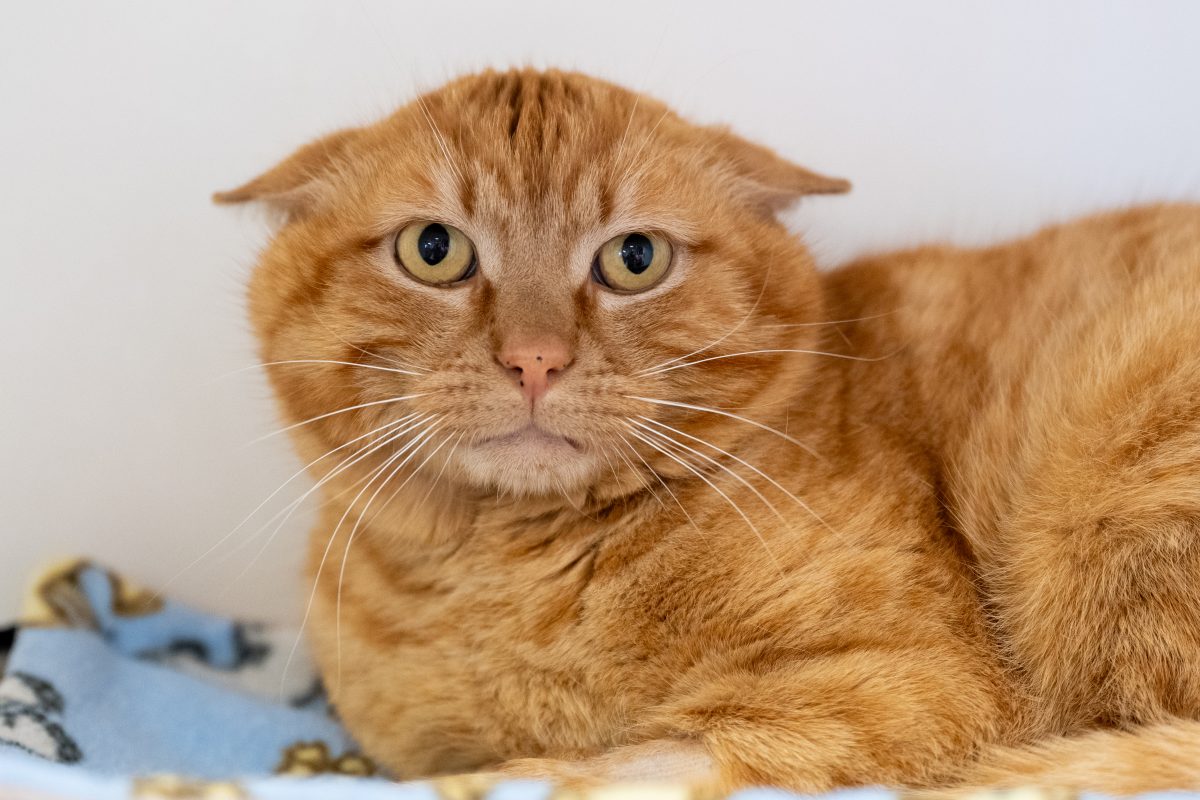
Have you ever been happily petting your cat only to have them suddenly whip around and look at you like you’ve committed an unforgiveable offence?
Or wondered why their tail is flicking when they seem perfectly content?
Cats may not speak our language, but that doesn’t mean they aren’t communicating. From the position of their ears to the movement of their tail, cats use their entire bodies to tell us how they’re feeling.
Learning to recognize these signals can help you better understand when your cat is relaxed, playful, nervous, overstimulated, or simply asking for a little space.
The most important thing to remember? Don’t rely on just one signal. Cat body language is best understood by looking at the whole cat and the situation they’re in.
The Tail Tells a Tale
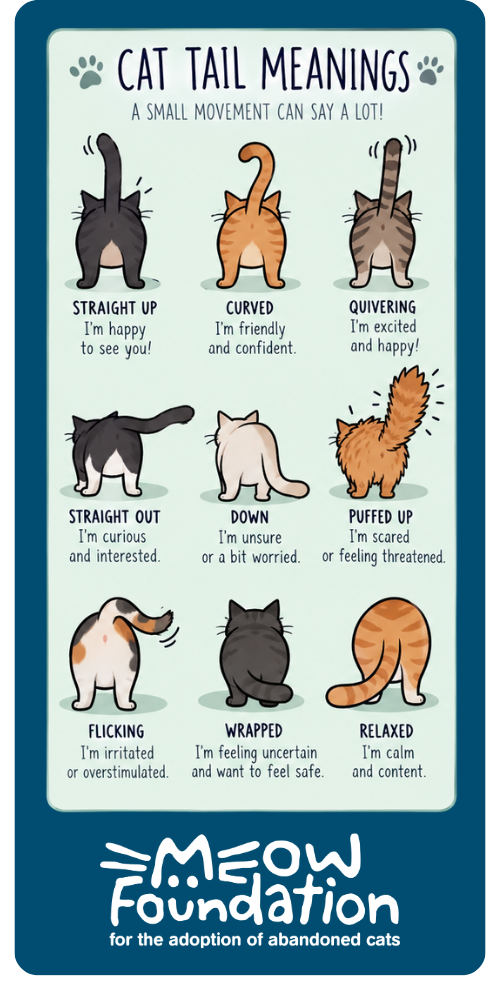
Your cat’s tail can tell you a surprising amount about how they’re feeling.
Straight up: A tail held high often belongs to a confident, comfortable cat. You may see this when your cat approaches you for attention or greets you after you come home.
Curved at the tip: Sometimes called a “question mark” tail, this can be another sign of a friendly, curious cat who is interested in what’s happening around them.
Puffed up: A dramatically fluffy tail usually means your cat has been startled, frightened, or highly aroused. They’re making themselves look bigger in response to whatever has caught their attention.
Tucked close: A tail held tightly against or underneath the body may indicate fear, nervousness, or uncertainty.
Flicking or thrashing: Unlike a happily wagging dog, a cat rapidly swishing or thumping their tail may be becoming irritated or overstimulated.
Tip: If your cat’s tail starts thumping halfway through a cuddle session, consider it a good opportunity to give them a break.
Keep an Eye on Those Ears
Those adorable little ears aren’t just listening for the sound of a treat bag opening from three rooms away. Their position can also offer clues about your cat’s mood.
Ears that are forward or resting naturally generally belong to a relaxed or interested cat.
Ears that are moving and rotating may simply mean your cat is listening closely to their surroundings.
When the ears begin turning sideways, sometimes earning the very scientific nickname of “airplane ears,” your cat may be feeling uncertain, uncomfortable, or overstimulated.
And ears that are flattened tightly against the head can be a much stronger signal that a cat is frightened, defensive, or extremely uncomfortable.
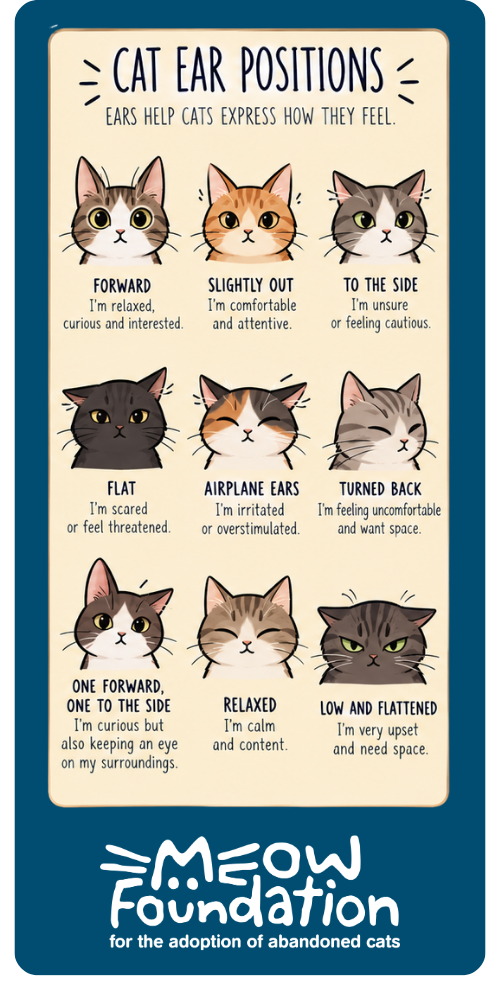
Ear positions can change quickly, so watching them during petting, play, or introductions can help you spot changes in your cat’s comfort level before their signals become more obvious.
The Eyes Have It
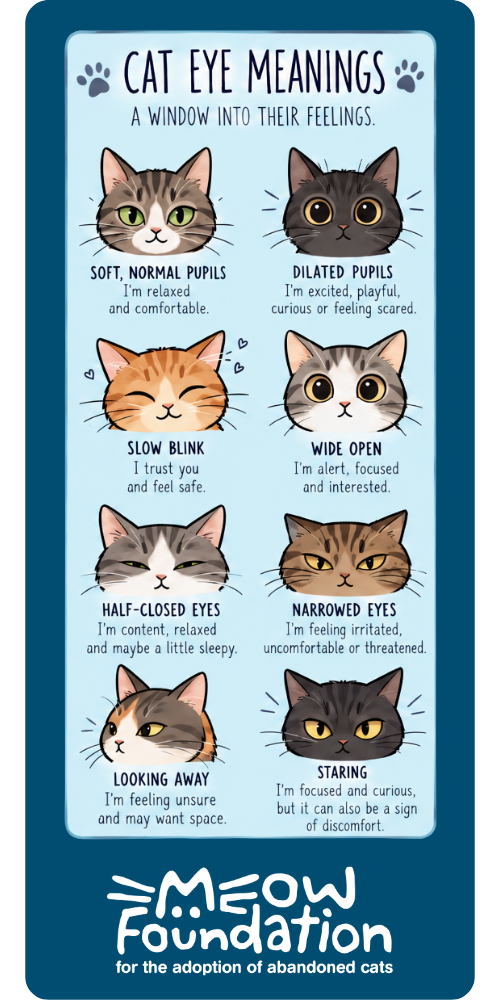
There’s a reason cat lovers get so excited about receiving a slow blink.
Soft, partially closed eyes and slow blinking are commonly associated with a cat who feels relaxed and comfortable. Try slowly blinking back—you might just get another one in return.
Wide eyes and dilated pupils, however, require a little more context.
Big pupils can appear when your cat is excitedly stalking a favourite toy, but they can also appear when they’re frightened or highly aroused. Look at the rest of their body to help determine what those big eyes are telling you.
Prolonged staring can also feel threatening in feline communication, particularly between unfamiliar cats.
Look at the Whole Cat
Sometimes the biggest clue is your cat’s overall posture.
A comfortable cat generally has a loose, relaxed body. They might stretch out on their side, settle into a cozy loaf, or lounge somewhere with seemingly no concern about what’s happening around them.
A nervous cat may crouch low, tuck their limbs underneath themselves, make their body appear smaller, or look for somewhere to hide.
A frightened or defensive cat may arch their back, puff up their fur, flatten their ears, or position themselves so they’re ready to escape if necessary.
And then there’s the belly.
A cat rolling over and exposing their stomach can be a wonderful sign that they feel safe and comfortable around you.
It is not necessarily an invitation for a belly rub.
For some cats, absolutely! For others, touching that irresistible fluffy belly is the fastest way to discover that all four paws are fully operational.
When in doubt, admire the belly from a respectful distance.
Learn the Subtle Signs of “I’ve Had Enough”
Cats rarely go from completely comfortable to biting or scratching without communicating something along the way. The problem is that humans don’t always notice the earlier signals.
During petting or handling, watch for changes such as:
- Tail flicking or thumping
- Ears beginning to turn sideways or backward
- Skin twitching along the back
- The body suddenly becoming tense
- Turning to look at your hand
- Moving their head or body away
- Attempting to leave
These signals may be your cat’s polite way of saying, “That’s enough for now.”
When we recognize and respect those early cues, we show our cats that their communication works. Giving them the choice to walk away can also help build trust and make future interactions more positive.
Is It Playtime?
Of course, not everything your cat communicates is serious.
Sometimes the message is simply: PREPARE TO BE POUNCED ON.
A playful cat may crouch or stalk, wiggle their backside before launching themselves at a toy, perk their ears forward, or suddenly race around the house for no apparent reason.
Dilated pupils can also accompany an exciting play session—which is another perfect example of why one body-language signal shouldn’t be interpreted on its own.
Interactive toys, such as wand toys, can give cats an appropriate outlet for stalking, chasing, pouncing, and other natural hunting behaviours.
Your ankles will thank you.
Every Cat Speaks a Little Differently
Understanding feline body language isn’t about memorizing a dictionary of tail positions and ear movements.
It’s about learning to observe your cat.
One cat may dramatically thump their tail when they’ve had enough attention. Another may simply turn their head away. Some cats announce exactly how they’re feeling, while shy or cautious cats may communicate much more subtly.
As you spend more time observing your cat, you’ll begin to recognize their individual patterns and preferences—and those little signals can help you understand when to play, when to offer affection, and when the kindest thing you can do is give them some space.
Ultimately, learning your cat’s body language can strengthen the relationship you share.
Because the goal isn’t to teach your cat to communicate differently.
It’s to become better at listening to everything they’re already telling you.